
What screens usually cause
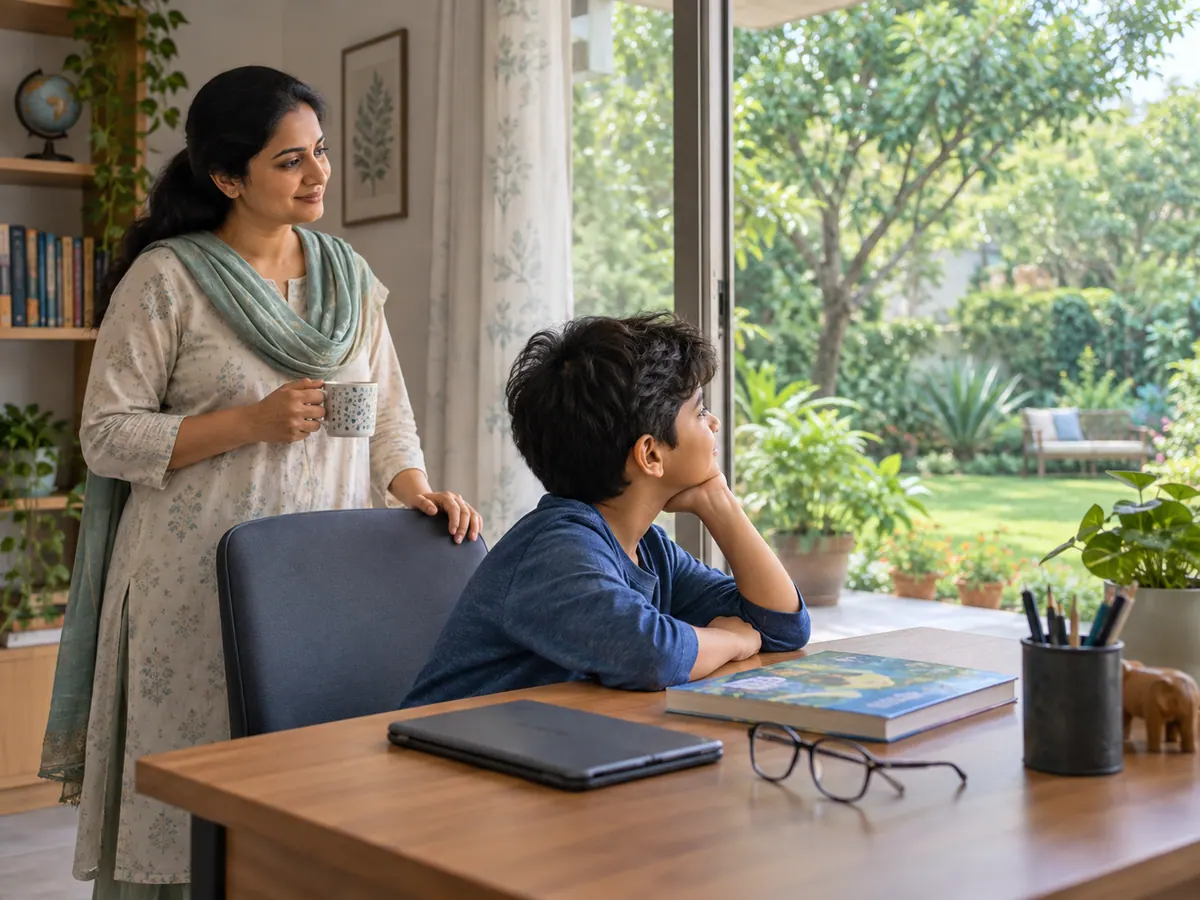
Long uninterrupted near work can lead to tired eyes, dryness, headache and temporary blur. Children may blink less and hold small devices very close.
Myopia has several influences. Screens are one part of near-work behaviour; replacing a phone with hours of equally close work does not solve the whole problem.
Build a healthier visual routine
Use regular distance breaks, comfortable lighting and an age-appropriate viewing distance. A larger screen farther away is preferable to a phone held near the face.
- Pause near work every 20–30 minutes
- Look across the room or outdoors
- Do not let screens displace sleep and activity
When examination matters
Screening may not replace a full examination when symptoms or risk factors exist. Prematurity, developmental concerns, an eye turn or family history can change timing.
Treatment may involve spectacles, amblyopia therapy, alignment management or a myopia-control discussion.
Signs a child may not be seeing clearly
Children do not always describe blur. Sitting very close to a television, holding books near the face, squinting, closing one eye, frequent headaches, losing place while reading or declining classroom performance can justify an eye examination. An eye turn, white pupil, persistent watering or unequal red reflex in photographs requires particular attention.
A school screening is useful but does not answer every question. It may miss unequal power, focusing difficulty, early eye disease or binocular-vision problems. Children born prematurely, those with developmental concerns and those with a strong family history of childhood eye disease may need examination even when no complaint is obvious.
Myopia control is more than stronger glasses
Myopia means distant objects focus in front of the retina. As the eye grows longer, the prescription may increase. Outdoor time and balanced near-work habits are valuable, while selected children may be offered specialised spectacles, contact lenses or low-dose atropine after individual assessment. These approaches aim to slow progression, not cure the eye permanently.
Regular measurement helps distinguish expected change from rapid progression. Parents should ask about the evidence, side effects, cost, monitoring and what happens if treatment stops. Adequate sleep, daylight activity and sensible device habits support eye comfort and general health without blaming one screen for every refractive problem.
Making spectacles work for a child
Accurate spectacles should be comfortable, centred and worn according to the clinician’s advice. A child who removes them may be struggling with fit, adjustment, teasing or an incorrect assumption about when they are needed. Frames should not slide or press painfully, and lenses should be replaced when badly scratched. Spectacles do not weaken the eyes; avoiding a necessary prescription can interfere with learning or visual development.
Questions patients commonly ask
Does screen time directly cause myopia?+
Myopia has genetic and environmental influences. Prolonged close work and limited outdoor time are associated with risk, but screens are one part of a broader visual routine.
How often should a child’s spectacle power be checked?+
The interval depends on age, symptoms and rate of change. A child with progressing myopia may need more frequent review than a child with stable vision.
Can children outgrow an eye turn or lazy eye?+
Some appearances change, but true strabismus or amblyopia should not be assumed to resolve. Early assessment matters because visual development has a limited window.
Clinical references
This guide is informed by patient guidance from established public-health and professional medical bodies.