
Vaccination guide

Vaccines belong in women’s preventive care—not only childhood care.

A practical guide to HPV, preconception, pregnancy and risk-based vaccination for women at different life stages.

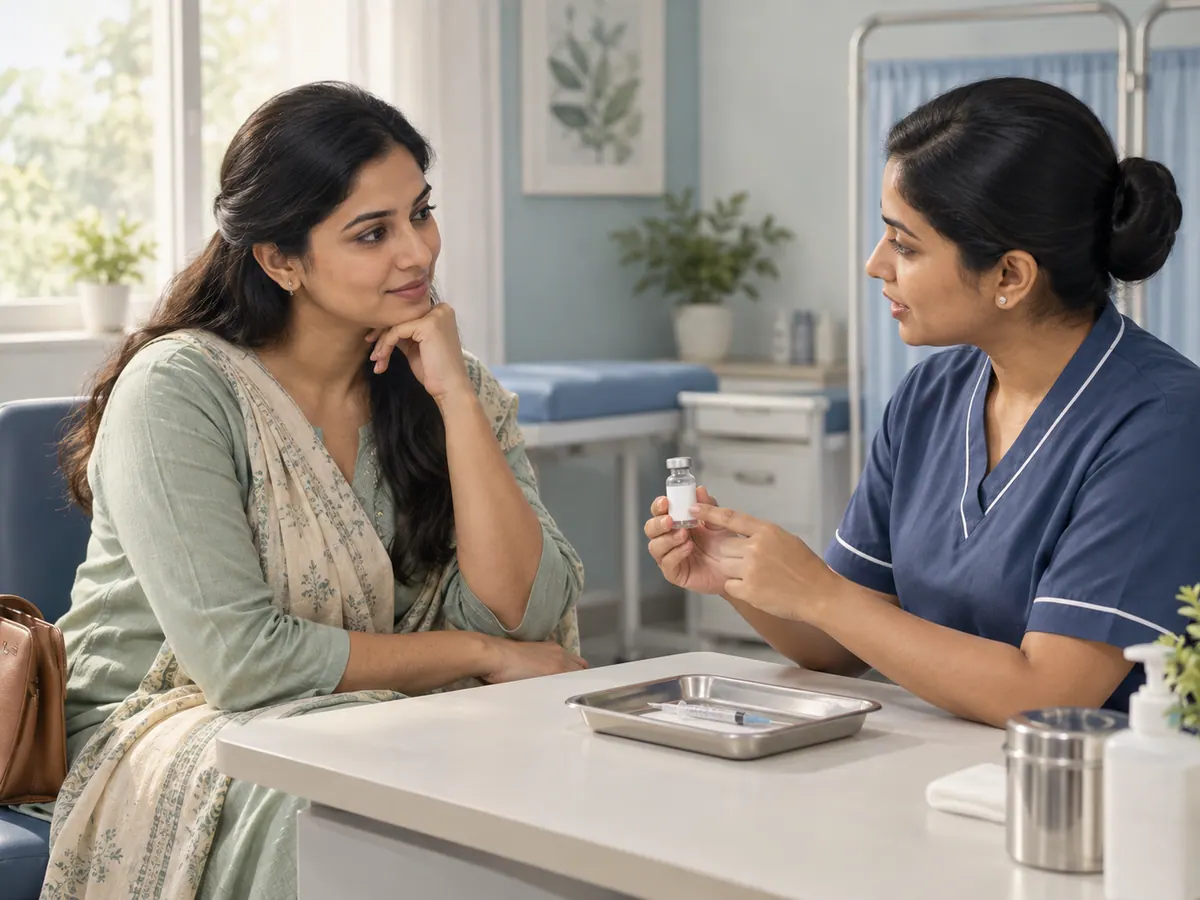
Illustration of a woman discussing vaccination with a healthcare professional
Illustrative image
Why this matters

Prevention works best when it is specific.

Vaccination needs change with age, pregnancy plans, occupation, medical conditions, travel and previous doses. A preventive visit can reconstruct an incomplete history and identify vaccines that are due without repeating doses unnecessarily.

HPV vaccination is a major form of cervical-cancer prevention, but it does not treat an existing HPV infection and does not replace cervical screening. Other vaccines may be particularly important before pregnancy, during pregnancy or for people with diabetes, immune conditions or occupational exposure.

01

HPV vaccination

HPV vaccination works best before exposure to HPV, but eligibility can extend beyond early adolescence under national guidance and individual clinical discussion.

  • Confirm age, prior doses and available vaccine schedule
  • Continue recommended cervical screening after vaccination
  • Discuss vaccination without stigma—HPV exposure is common
02

Before pregnancy

Preconception review can identify immunity gaps, especially for infections that may be more serious during pregnancy. Some live vaccines are given before—not during—pregnancy.

  • Review rubella-containing vaccine history and immunity when relevant
  • Update other routine vaccines according to age and risk
  • Ask how long to avoid pregnancy after any live vaccine advised
03

During pregnancy

Selected non-live vaccines can protect the mother and help protect the newborn. Timing depends on local guidance, season, pregnancy stage and health history.

  • Discuss influenza vaccination
  • Discuss tetanus, diphtheria and pertussis protection under local schedules
  • Do not start or avoid a vaccine solely on internet advice
04

Risk-based vaccines

Hepatitis B, pneumococcal and other vaccines may be recommended because of occupation, travel, chronic disease, immune status or exposure risk.

  • Bring previous records or photographs of vaccine cards
  • Mention allergies and any serious past vaccine reaction
  • Plan travel vaccines early when possible
Keep in mind

Three principles to take to your appointment.

  1. 1Vaccination schedules vary by age, product and national programme.
  2. 2Pregnancy status and immune-suppressing treatment can change what is appropriate.
  3. 3A vaccine recommendation is individual; the page is not a dosing schedule.
Vaccination through life FAQs

Short answers to common questions.

01Does the HPV vaccine replace cervical screening?

No. Vaccination greatly improves prevention but does not cover every cancer-causing HPV type and may occur after prior exposure. Follow the cervical-screening schedule advised for your age and risk.

02Can vaccines be given during pregnancy?

Some non-live vaccines are recommended during pregnancy, while live vaccines are generally avoided. The exact vaccine and timing should be checked with the obstetric clinician.

03What if I have lost my vaccine records?

Share whatever information you have, including school, employer or pregnancy records. The clinician can assess likely prior doses and advise whether records, testing or vaccination is appropriate.

Preventive health hub

Build the rest of your prevention plan.

Return to the hub to review screening, vaccines, healthy ageing and risk-reducing options together.

View all preventive guides