
Nutrition and daily life

Nutrition and daily life during pregnancy.

Most healthy pregnancies benefit from varied food, appropriate supplements, safe movement, adequate rest and avoidance of tobacco, alcohol and other harmful exposures. Advice should still be individual when nausea, diabetes, anaemia, thyroid disease, low weight or other concerns are present.

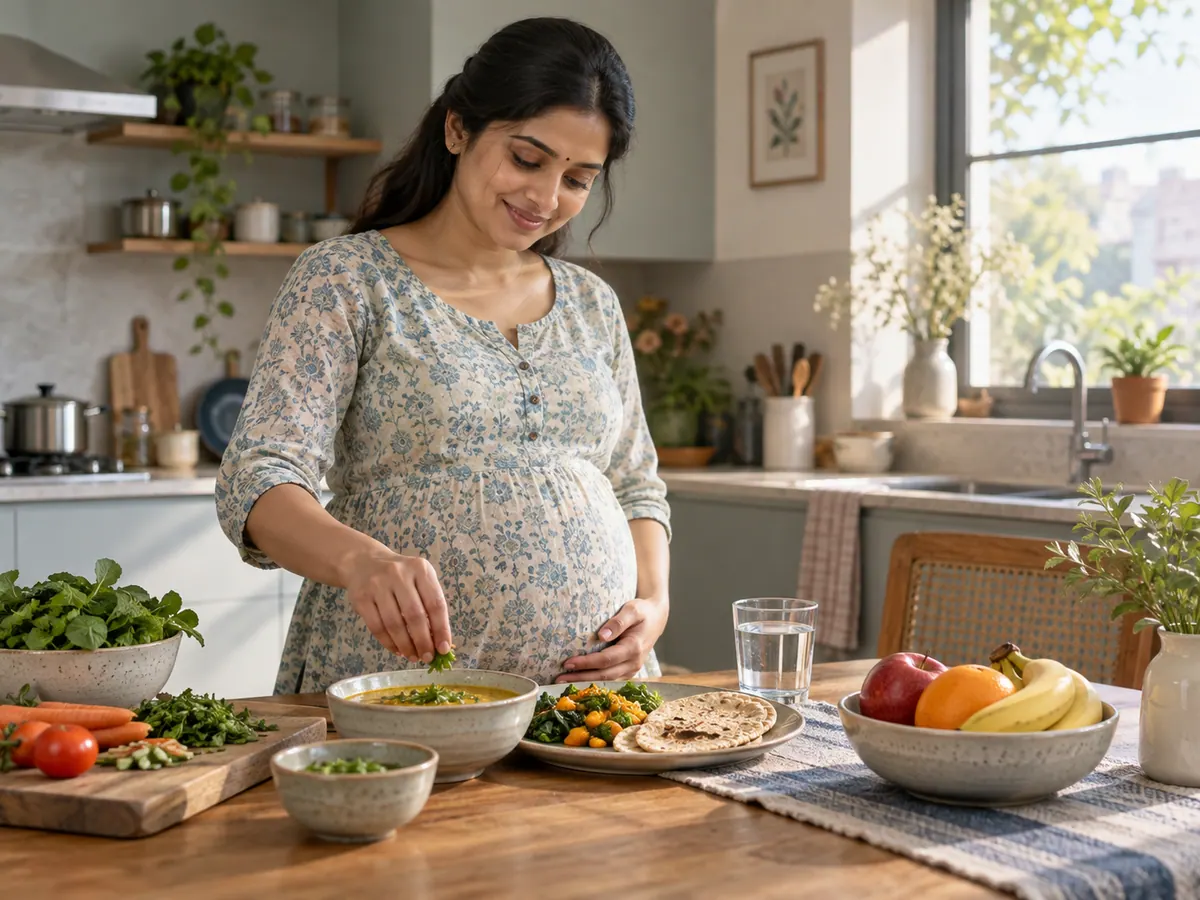
Illustration of a pregnant woman preparing a balanced everyday meal
Detailed guide Clinically reviewed
What to know

Understand your care and know what to do next.

01

Food should be safe and sustainable

Build meals around varied grains, pulses or other protein sources, vegetables, fruit, dairy or suitable alternatives and enough fluids. Food safety matters: avoid unpasteurised products and undercooked animal foods, and use careful hand, surface and storage hygiene. Avoid street food when clean water, hygienic preparation or safe storage cannot be assured, especially uncovered food, pre-cut fruit and uncooked chutneys. Choose freshly cooked food served hot and safe drinking water.

There is rarely a need for a fashionable restrictive diet. If repeated vomiting prevents you from keeping water or other drinks down, seek urgent medical assessment. Rapid weight change or difficulty eating also needs medical advice.

  • Variety over rigid rules
  • Safe preparation and storage
  • Personalise for diabetes, anaemia or nausea
02

Supplements are prescribed, not collected

Folic acid is important before conception and throughout the first 12 weeks, including the first and second months. If you have just discovered the pregnancy, ask promptly about starting it; higher doses are needed only in selected circumstances on medical advice. Iron, calcium, vitamin D or other supplements may be advised according to local protocols, diet, blood results and individual risk.

More is not automatically better. Avoid self-starting herbal products or multiple prenatal formulations, and check labels so ingredients are not duplicated. Some vitamin A forms can be harmful in pregnancy.

  • Confirm dose and duration
  • Mention every over-the-counter product
  • Review side effects instead of silently stopping
03

Movement and work can be discussed

Physical activity is usually encouraged in uncomplicated pregnancy, adapted to previous fitness and comfort. Work, travel and exercise advice changes when there is bleeding, risk of preterm birth, placenta-related concerns or another medical complication.

Ask before beginning intense new activity. Stop and seek advice for bleeding, fluid leakage, chest pain, faintness, severe breathlessness, painful contractions or a meaningful change in fetal movement.

  • Choose comfortable, sustainable activity
  • Hydrate and avoid overheating
  • Individual restrictions require a clinical reason

This guide provides general education, not a diagnosis or an individual pregnancy plan. Follow the advice given for your pregnancy and seek urgent assessment when warning symptoms occur.

Complete maternity pathway

Return to the pregnancy hub for the whole journey.

Explore antenatal care, tests, daily life, delivery, urgent warning signs, postnatal recovery, feeding support, insurance and consultation details.

Explore pregnancy care