
Start with your priorities
Consider how soon pregnancy may be desired, comfort with a daily action or procedure, privacy, period changes, cost and need for STI protection.
Migraine pattern, smoking, blood pressure, clot history, breastfeeding and medicines can alter which hormonal methods are suitable.
The broad options
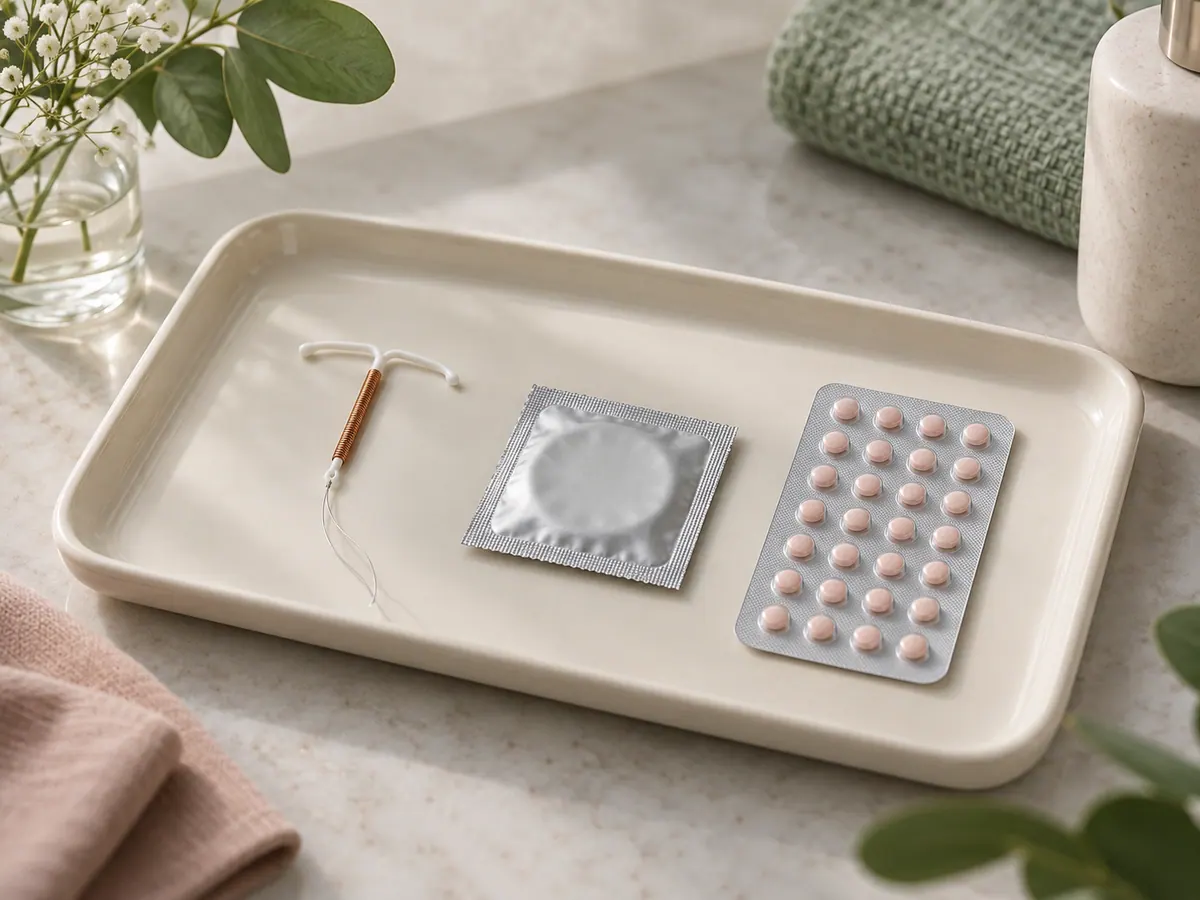
Choices include barriers, combined or progestin-only pills, injections, implants, hormonal and copper IUDs, fertility-awareness methods, emergency contraception and permanent contraception.
IUDs and implants require placement but little ongoing action. Copper and hormonal IUDs affect bleeding differently.
Plan for change
Ask what to do after a missed pill, late injection, condom failure or unprotected intercourse. Emergency contraception is time-sensitive and does not end an established pregnancy.
A method can be changed if side effects or priorities change.
Effectiveness depends on how a method is used
Methods that require daily, weekly or per-intercourse action are more vulnerable to missed use. Implants and intrauterine devices provide long-acting reversible contraception without daily remembering. Injections last for months but require timely repeat doses. Permanent contraception is intended for people who are confident they do not want a future pregnancy.
Effectiveness is not the only measure. Bleeding pattern, privacy, control, reversibility, side effects, cost and medical eligibility can matter just as much. Condoms are the main contraceptive method that also reduces sexually transmitted infection risk, so they may be combined with another method when both pregnancy and infection prevention are priorities.
Starting, switching and emergency contraception
Ask when protection begins after starting a method and whether backup condoms are needed. When switching, overlapping methods for a short period may prevent a gap. Vomiting, interacting medicines, a missed pill or a delayed injection can change protection, and the correct response depends on the method and timing.
Emergency contraception should be discussed as soon as possible after unprotected intercourse or contraceptive failure. Options and effectiveness vary with timing and individual factors. It does not protect later intercourse in the same cycle and does not replace ongoing contraception. A late period afterward warrants pregnancy testing according to the advised timeline.
Side effects versus warning signs
Changes in bleeding, mild nausea or breast tenderness can occur after starting some methods and may improve with time. Ask what is expected and when review is due. Severe chest pain, breathlessness, neurological symptoms, marked leg swelling or a positive pregnancy test with pain requires urgent assessment. Pain, fever or unusual discharge after an intrauterine procedure also needs prompt care. Never remove an implant or IUD yourself.
Questions patients commonly ask
Which contraception is most effective?+
Implants and IUDs are among the most effective reversible options because they require little ongoing action. The best personal choice must also be medically suitable and acceptable.
Can contraception cause permanent infertility?+
Reversible methods do not cause permanent infertility. Return to fertility varies; the contraceptive injection may have a longer delay after stopping than pills, implants or IUDs.
Do IUDs suit someone who has never given birth?+
They can be suitable for many people who have not given birth. Uterine anatomy, infection risk, bleeding preferences and individual comfort should be discussed.
Clinical references
This guide is informed by patient guidance from established public-health and professional medical bodies.