
Toric IOL guide

Toric lenses address astigmatism—not every focusing distance.

A toric IOL has different powers in different meridians to reduce suitable regular corneal astigmatism. Toric optics can be combined with monofocal and selected presbyopia-correcting lens designs.

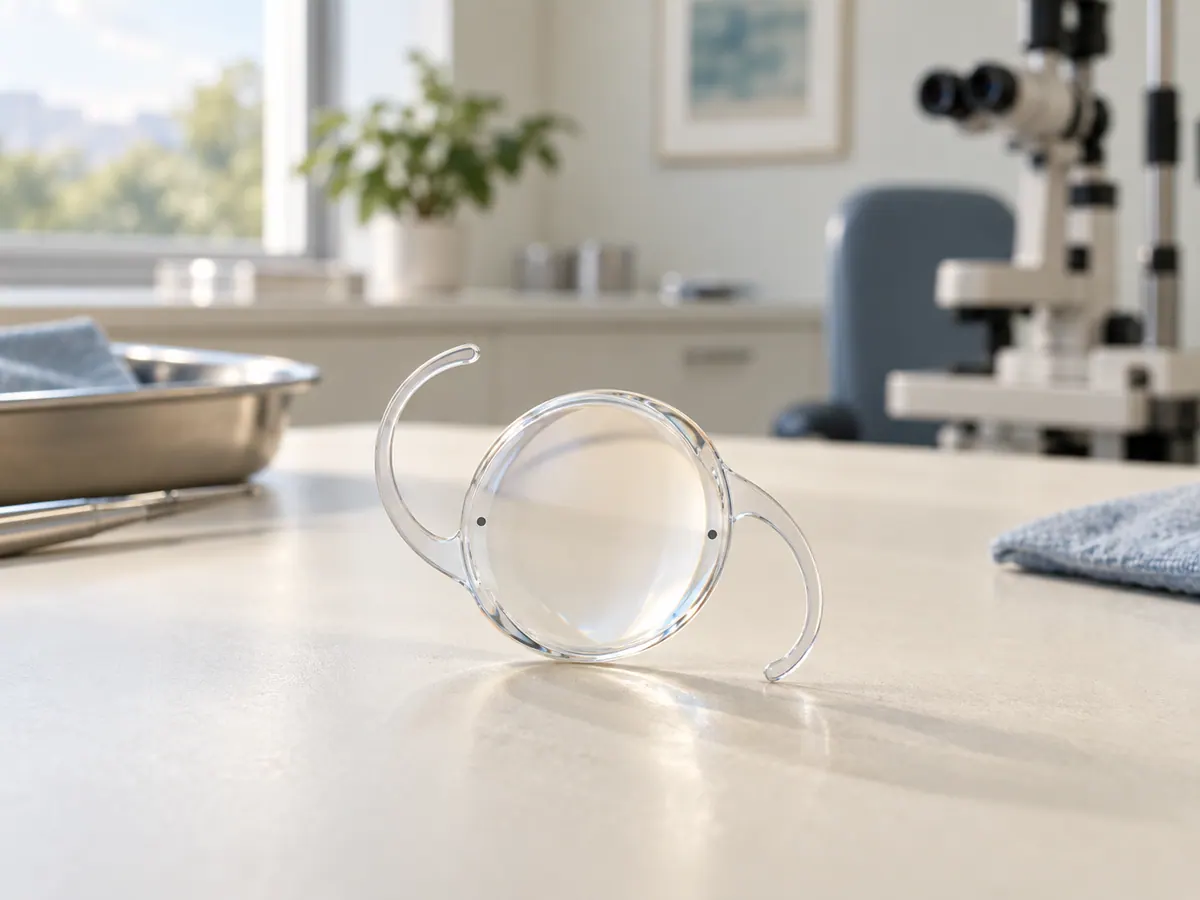
Illustration of a transparent toric intraocular lens model
3 centres Virar & Nallasopara
What to know

The essential details, without the sales language.

01

Who may be considered

Suitability depends on the amount and regularity of corneal astigmatism and the reliability of corneal measurements.

Astigmatism caused by an irregular or scarred cornea may not respond like regular corneal astigmatism. Keratometry and, when indicated, corneal topography or tomography help the surgeon understand the pattern.

02

What it may improve

A well-planned toric lens can reduce residual astigmatism and dependence on distance glasses, but it does not guarantee spectacle-free vision.

Toric describes cylinder correction rather than focus range. A toric lens may still be monofocal, EDOF or multifocal, so near-vision expectations must be discussed separately.

03

Why alignment matters

The lens is positioned on a calculated axis. Rotation or residual prescription can reduce the intended correction and may require further management.

The axis is planned before surgery and checked when the IOL is placed. If the result differs from the target, glasses, lens repositioning or another treatment may be considered after the eye is assessed.

This page provides general patient information. Your examination, surgeon’s advice and written treatment instructions determine what is appropriate for your eye.

Complete cataract guide

Compare every lens option in one place.

Return to the cataract hub for symptoms, surgery timing, IOL categories, insurance guidance, centres and FAQs.

Explore cataract care